
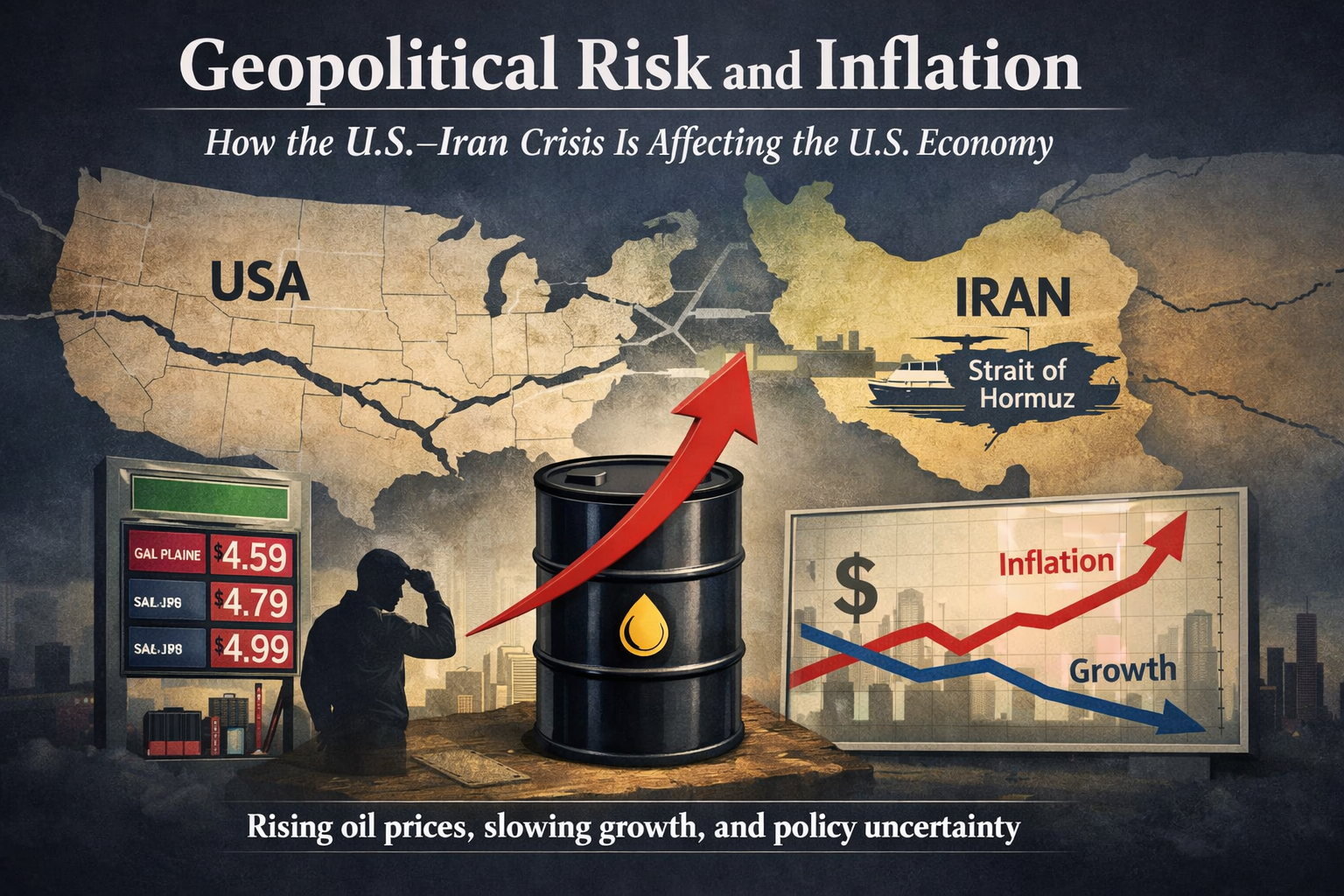
The ongoing conflict between the United States and Iran, which has escalated in recent weeks toward open military confrontation, marks a turning point in the global economic landscape. While many analysts initially considered the U.S. economy relatively insulated from external shocks, recent events—including the near-disruption of oil passage through the strategic Strait of Hormuz and escalating military attacks—have generated rising geopolitical risk with direct repercussions on inflation, financial markets, and economic expectations.
1. Understanding Geopolitical Risk
Geopolitical risk refers to the likelihood that international events—wars, tensions between powers, sanctions, or political crises—negatively affect economic and financial stability. When key regions like the Middle East are disrupted by conflict, especially those controlling strategic resources like oil, global markets typically respond with increased volatility, higher risk premiums, and rapid shifts in inflation and growth expectations. (IMF)
2. The Energy Channel: Oil and Imported Inflation
One of the clearest ways the U.S.–Iran crisis is affecting the U.S. economy is through the energy market:
- Rising oil prices: The threat of disruption in the Strait of Hormuz—which handles about 20% of the world’s oil—has pushed crude prices upward, reflecting a geopolitical “risk premium.” (The Guardian)
- Energy inflation: Higher oil prices quickly translate into increased costs for gasoline, diesel, and other domestic and industrial fuels, driving consumer price inflation. (Wikipedia)
In the U.S., where energy production is relatively strong, the immediate impact was moderate. However, gasoline spikes—particularly in states like California—have complicated the Federal Reserve’s ongoing fight against inflation. (Wikipedia)
Shipping disruptions and increased insurance costs also raise the price of imported goods and raw materials, putting further upward pressure on overall prices.
3. Economic Expectations and Higher Prices
Inflation is not measured only by current prices but also by future expectations. The uncertainty created by the conflict leads consumers, businesses, and investors to adjust their inflation expectations upward, which can:
- Pressure wages as workers anticipate higher prices.
- Reduce real purchasing power.
- Affect corporate spending and investment decisions. (IMF)
This “second-round effect” may complicate macroeconomic inflation management, even if oil prices later stabilize.
4. Financial Markets and Volatility
Rising geopolitical risk has also impacted financial markets:
- Stock declines: Major U.S. indices (S&P 500, Dow Jones, Nasdaq) have shown correction signs due to uncertainty over growth, persistent inflation, and potential negative effects on consumer spending. (MarketWatch)
- Safe-haven assets: Gold and U.S. Treasury bonds have moved in typical “flight-to-safety” patterns.
- Credit and the dollar: Higher perceived risk can weaken business confidence, reducing investment, or strengthen the dollar due to flows into safer assets. (The Coin Republic)
This environment forces portfolio managers to increasingly integrate geopolitical factors into asset valuation models—something less common just a few years ago.
5. The Monetary Policy Dilemma
One of the most complex consequences for the U.S. economy is the dilemma facing the Federal Reserve and other policymakers:
- Persistent inflation through the energy channel may force the Fed to maintain higher interest rates for longer.
- Prolonged high rates, however, can slow economic growth, strain credit markets, and affect productive investment.
Balancing these effects will be crucial in determining whether the U.S. enters slower growth or even recession, while still facing external inflationary pressures.
6. Impacts Beyond Oil
While the energy market is the most visible channel, other areas are affected:
- Supply chains: Naval and logistical risks increase costs for inputs and transportation.
- Manufacturing and agriculture: Rising fertilizer and transport costs translate into higher end-product prices. (The Guardian)
- Business confidence: Heightened uncertainty leads to more cautious investment and corporate decision-making.
7. Conclusion: A Risk Filtering Into the Real Economy
The U.S.–Iran conflict is no longer just a diplomatic or military issue; it has become a major economic factor affecting prices, markets, expectations, and policy decisions.
The main transmission mechanisms—through oil prices, inflation expectations, investment, and monetary policy—highlight how interconnected the global economy is with geopolitical events. Although the direct impact on the U.S. economy may be less severe than in regions highly dependent on imported oil, the persistent risk indicates that economic policy must adapt to a new context in which geopolitics plays a central role in macroeconomic stability.
Leave a Reply